
Tabeer Ali
@tabeera682Tabeer Ali's Podcasts
5 podcasts
The 50 archers at the Battle of Uhud
In March 625 AD, a force of 3,000 Makkans led by Abu Sufyan marched toward Madinah to avenge their previous defeat at Badr. The Prophet Muhammad met them at the hill of Uhud with 700 men after Abdullah bin Ubayy withdrew 300 soldiers from the ranks before the fighting began. Although the Muslim archers under Abdullah bin Jubair initially repelled Khalid bin Walid’s cavalry, their decision to leave the mountain pass to collect spoils allowed a counter-attack that led to the death of 70 Muslims, including the Prophet's uncle Hamza. This engagement demonstrated the tactical importance of discipline and the consequences of internal division during the early expansion of Islam.
The Battle of Badr 624 AD
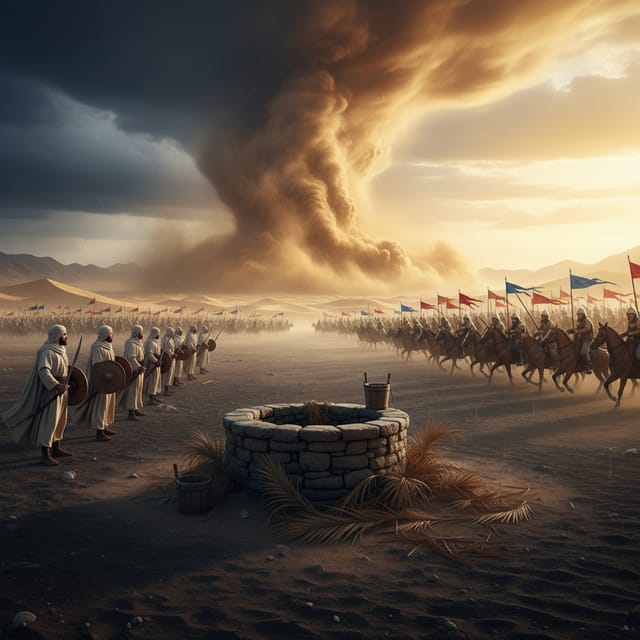
On the 17th of Ramadan in 624 A.D., an army of 313 Muslims encountered 1,000 Quraish warriors at the wells of Badr. Muhammad led his companions against the Meccan forces commanded by Abu Jahl after a dispute over trade routes and a caravan led by Abu Sufyan. This engagement established the military presence of the Madinah community and shifted the power balance in the Arabian Peninsula. Despite being outnumbered and having only two horses, the Muslim forces utilized the sandy terrain and strategic control of water sources to secure a victory.

The Charter of Madinah
In 622 A.D., Prophet Muhammad migrated to the city of Yathrib to resolve a 120-year conflict between the Aws and Khazraj tribes. This migration led to the creation of a 47-clause constitution that established a sovereign nation-state for Muslims, Jews, and Pagans. The document guaranteed religious liberty for Jewish tribes like the Banu Nadir and defined collective defense responsibilities for all citizens. This legal framework replaced tribal anarchy with a centralized government and a system of communal financial aid.
The First Year in Madinah
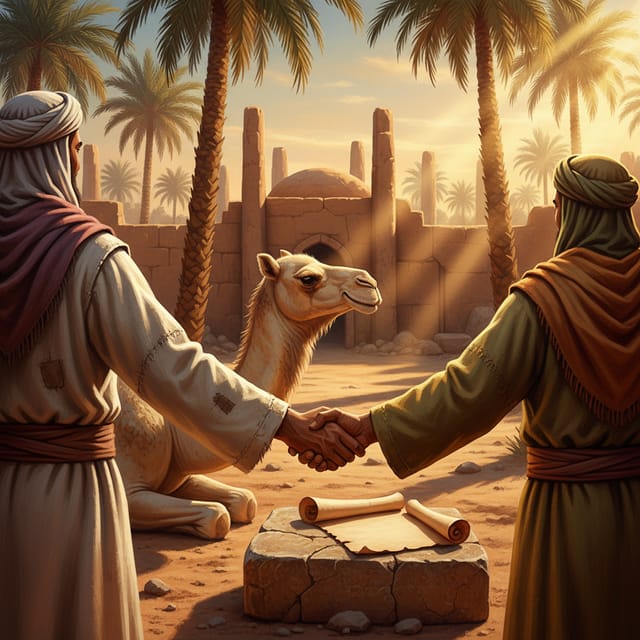
Prophet Muhammad arrived in Madinah where his she-camel, Qaswa, chose the building site for Masjid al-Nabawi on land owned by the orphans Sahil and Suhail. The community established the Azaan after Abdullah bin Zaid shared a dream of the call to prayer, leading to Bilal being appointed as the first Muezzin. This period marks the formal creation of the Brotherhood between the Muhajirin and Ansar and the signing of the Treaty of Madinah with the Jewish tribes of Banu Qainuqa, Banu Nazir, and Banu Quraiza. The city was officially renamed from Yathrib to Madina tul Nabi to reflect its new role as the center of the Islamic state.

Muhammads flykt till Medina
In September 622 AD, the Prophet Muhammad and Abu Bakr fled Makkah to escape an assassination plot orchestrated by Abu Jahal at the Dar-un-Nadwa council hall. They took refuge in Cave Thawr for three days while Amr ibn Fuhayrah used a flock of sheep to graze over their footprints and hide their trail from Quraish scouts. This migration led to the establishment of the first Islamic state in Madina and the drafting of a 47-clause constitution that granted equal rights to Jewish tribes and local Arab residents. The journey concluded with the construction of Masjid-al-Nabawi on land purchased from two orphans named Sahil and Suhail.